A square face shape is usually easiest to recognise from its width pattern, not from a single dramatic jaw. The forehead, cheekbones, and jaw often sit in a similar range, and the line from cheek to jaw has visible structure rather than a continuous soft curve. Those traits can look bold, calm, delicate, or striking depending on expression and styling; the label describes proportions, not gender or personality.
Notice the width pattern before focusing on the jaw
Look at a straight-on image with the head level and hair moved away from the temples. On a square face, the forehead can appear close in width to the cheekbones, and the jaw remains comparatively broad rather than tapering quickly to the chin. The jaw corners may be easy to see, but they do not need to be sharp to count. Face length can be similar to width or slightly longer. What matters is the sense of an outline that stays fairly even through the upper, middle, and lower face. A close selfie can soften or widen features depending on its lens, so take a photo from farther away and crop it. In the mirror, step back until you see the hairline and chin together rather than studying one side at a time.
Compare square with round and rectangle shapes
Round and square faces can both look close to equal in length and width. The distinction is usually the route around the edge: a round face moves from cheek to jaw in a broad, continuous curve, while a square face has more directional changes near the temples and jaw corners. Rectangle or oblong faces can share a strong jaw, but the vertical distance from hairline to chin is more pronounced and the sides often look straighter. Facial fullness can blur these differences, especially in photographs with soft light. Compare several neutral images if you can. Ask whether the jaw remains broad when you are not smiling, whether the forehead is still substantial with hair pulled back, and whether length clearly outweighs width. Those repeatable observations are more useful than trying to match a drawing.
| Feature to compare | Square tendency | Nearby pattern to check |
|---|---|---|
| Forehead and jaw | Often similar in visible width | Heart faces narrow much more toward the chin |
| Jawline | Broad with noticeable corners or direction | Round faces curve more continuously |
| Face length | Close to width or moderately longer | Rectangle faces have more vertical length |
| Temple-to-cheek line | Fairly even, not strongly peaked | Diamond faces peak more at the cheekbones |
Use hairstyles to decide where you want the emphasis
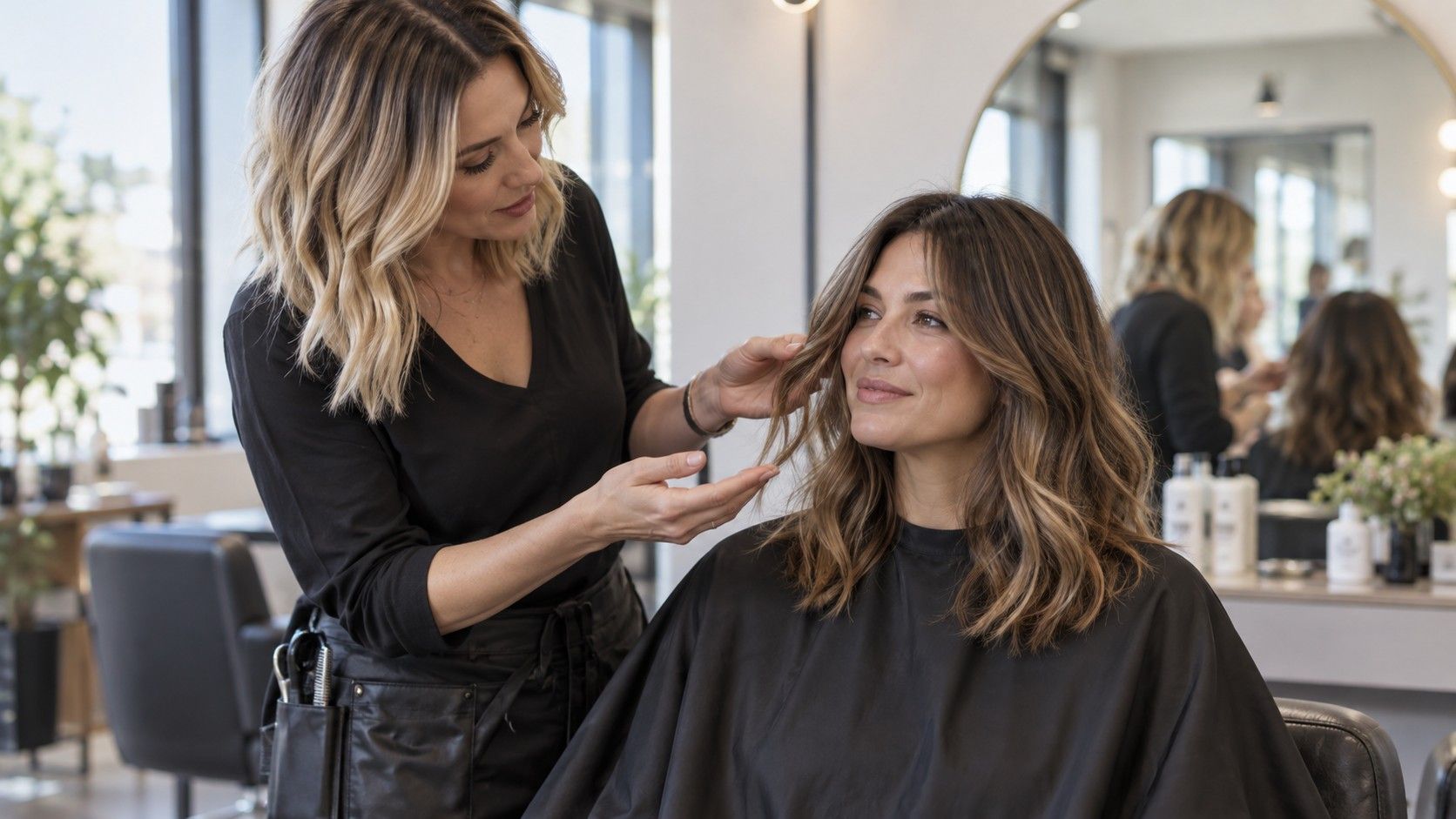
Hair is a flexible frame, so use it to test a visual preference rather than follow a rule that promises to soften anything. Long layers that begin below the jaw can create movement beside the lower face. A side part can interrupt an even vertical line, while a centre part can make the structure look more symmetrical and graphic. Curtain fringe that opens around the cheekbones changes the upper-face frame; a blunt fringe brings attention toward the forehead. Short styles can be especially revealing because they show the temple and jaw shape, but that may be a reason to try them rather than avoid them. At a salon, talk about where volume will sit after drying, how a layer ends around the jaw, and how often you are willing to style it. Those checks make a haircut workable in everyday life.
Choose frames and brow balance for comfort as well as contrast
Rounded glasses are often proposed as a contrast to a square face jawline, while rectangular frames can echo the existing structure. Both can work. Try a rounded pair if you want a gentler transition around the eyes, or a straighter pair if you like a more defined look. The bridge, width, and height of the frame have at least as much impact as the frame category. A frame that pinches at the temples or slides down will never be a useful styling choice. Brow shape also changes the upper-face emphasis: a soft arch can introduce a curve, while a straighter brow line can reinforce the forehead. Look in daylight and move your face while testing; a still mirror pose does not show how a frame sits during an ordinary day.
Use makeup to explore structure without hiding it
Makeup can change light and emphasis, but it does not need to erase a square face jawline. Blush placed high on the cheekbone and blended outward can guide the eye upward; a softer, more central placement keeps the overall effect gentle. If you use contour, a small amount under the cheekbone or near the outer forehead is easier to control than a heavy stripe along the jaw. In daylight, a very dark contour can look disconnected from the rest of the complexion, so photograph it before committing to a routine. The same applies to hair and frames: make one adjustment at a time and notice the result. A square face is simply a clear, balanced structure. The useful choices are the ones that make that structure feel like yours, whether they add curves, preserve angles, or leave it entirely alone.
A square face label is most helpful when it makes everyday experiments clearer. Try a side part without changing the cut, compare a rounded frame with a straight-edged one, or move blush slightly higher while keeping the rest of the makeup the same. Look at the result in daylight and in motion, not only in a posed mirror image. There is no requirement to soften a strong jawline, just as there is no requirement to emphasize it. Hair texture, fit of glasses, upkeep, and personal taste are the practical parts that decide whether a choice lasts. Keep the observations that repeat: where the face appears widest, how the jaw reads when relaxed, and which framing choices feel most natural to you.
If the distinction between square and rectangle remains uncertain, repeat the check from a greater camera distance. The important information is still visible: the relationship of forehead, cheekbones, jaw, and length, plus the way you prefer to frame them in everyday life.
That is plenty of information for a useful next choice.