Searching for the best hairstyle for face shape usually produces a chart that assigns one answer to each outline. Charts are quick, but haircuts are not. Your texture, density, growth pattern, wardrobe, glasses, and willingness to style every morning affect the result at least as much as a face-shape label. A more useful process is to notice the visual effect you want, then choose a cut that can create it with the hair you actually have. Face shape can guide the conversation; it should not end it.
Start with your hair before you start with a face-shape chart
Before collecting reference photos, write down what your hair does when you leave it alone. Is it fine and straight, dense and wavy, tightly coiled, or somewhere between? Does a fringe separate after an hour? Does a centre part expose a cowlick? Does the hair expand in humidity? These details decide whether a proposed cut will look similar after you wash it. A face shape hairstyle that needs a round brush, heat tools, and twenty minutes every day is not automatically wrong, but it should be a deliberate choice.
Choose the visual effect you want to see in the mirror
Density is different from texture. Fine hair can be dense, and coarse hair can be sparse. Density affects how much volume a bob, fringe, or layer can hold; texture affects the outline it creates. A blunt collarbone cut may look full and controlled on dense straight hair, while the same cut may form a triangle of volume on thick waves. Ask a stylist to explain what will happen as the cut dries naturally, not only how it will look immediately after a blowout.
Your face is also not a flat outline. Cheekbones, forehead, jaw, neck length, and features all contribute to the result. Glasses and brows can change the upper face; a favourite collar can change the lower frame. Use face shape as one variable. When a chart says a cut is forbidden but you see it working on people with a similar texture and routine, the chart is probably too simple.
Instead of asking which haircut you are allowed to have, name the effect you want. You may want more movement around the cheeks, a cleaner jawline, a softer forehead, less hair in your eyes, or a stronger graphic edge. These are visible outcomes you can discuss with a stylist. For example, a heart or triangle face label may suggest where volume could sit, but your actual preference might be to keep the face open and let the structure show.
Think about contrast as well. A sharply cut blunt bob beside a softly rounded face creates one kind of energy; loose layers beside the same face create another. Neither is a correction. If you have an angular jaw, you might enjoy curved waves that soften the overall composition, or you might choose a precise cut that echoes the angles. The better option is the one that feels intentional with your clothes, makeup, and usual level of polish.
| Effect you want | Haircut variables to discuss | Everyday check |
|---|---|---|
| More softness around the face | Curved layers, side part, loose fringe | Does it still move well when air-dried? |
| A cleaner, stronger outline | Blunt perimeter, clear parting, reduced layers | Does it hold its line between trims? |
| More upper-face presence | Fringe, temple volume, root lift | Can you style the fringe on a rushed morning? |
| More movement near jaw or neck | Collarbone layers, soft bends, textured ends | Does it tangle or need constant heat styling? |
Keep the effect specific enough to judge. Saying that you want a balanced face is vague and can lead to a stylist making assumptions you do not share. Saying that you want the hair to sit away from your glasses or to have width near the collarbone gives a clearer direction. You can then decide whether the reference photo solves that real problem.
Use length and volume deliberately, with your routine in mind
Length changes the frame around the face, but long hair is not inherently soft and short hair is not inherently bold. A long cut with flat roots and no face framing can create a strong vertical line; a short layered cut can create width and movement at the cheeks. For haircuts for face shape, look at where the hair is fullest rather than only where it ends. Volume at the crown, temples, cheekbones, jaw, and shoulders produces different impressions.
A fringe is one of the most visible tools, and also one of the most demanding. Curtain bangs can open the forehead while adding movement at the temples. A full blunt fringe creates a more horizontal line and needs frequent trimming. Side fringe can soften a parting and work around a cowlick, but it may fall forward during exercise or rain. Ask yourself what happens on the days you wear your hair tied back. A fringe that only works loose may not suit your routine.
Layers deserve the same practical check. They can create shape in thick hair, release weight from curls, or make fine hair look more active. They can also make the ends look thinner or require more styling than a blunt cut. Ask where the shortest layer will land when your hair is dry and whether that placement fits your face framing goal. The phrase long layers is not enough; two centimetres can change the visible shape considerably.
Bring useful reference photos to the haircut conversation
Bring more than one photo, and choose them for different reasons. One might show a fringe you like, another the length, and another the texture or volume. Add a photo of your own hair on a good normal day. A stylist can compare your density, curl pattern, and growth direction with the inspiration rather than promising an identical result. This makes the discussion more honest and often produces a better version of the idea.
Tell the stylist what you do not want as clearly as what you do want. Perhaps you do not want hair in your eyes, high-maintenance styling, thinning around the ends, or a shape that disappears after a week. Mention your glasses, whether you wear a helmet, how often you wash your hair, and whether you usually part it in the same place. These details make a face shape hairstyle practical instead of theoretical.
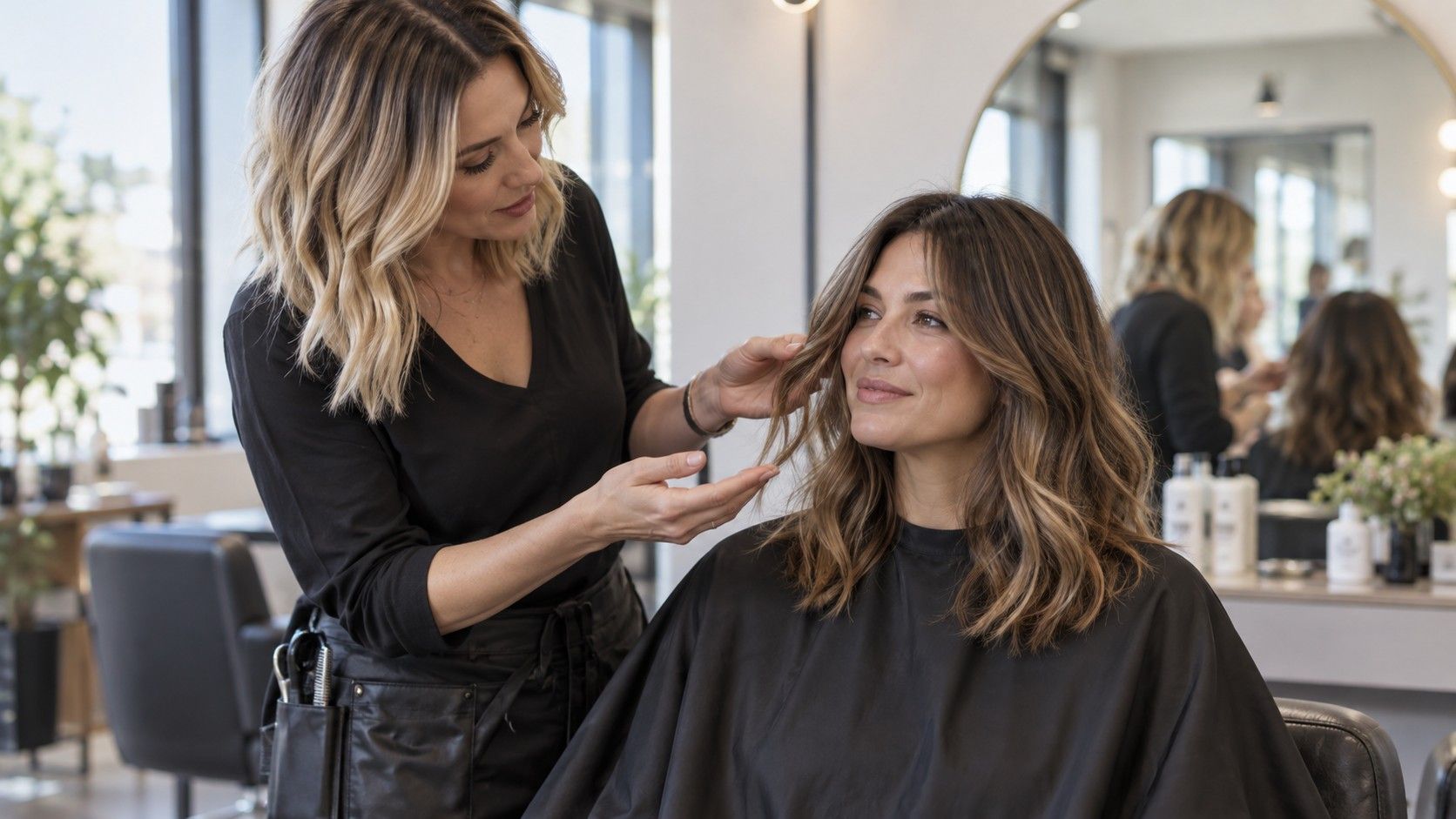
During the appointment, ask to see the cut before the final styling product is added. This is a useful moment to check the shape around the hairline, jaw, and shoulders. If the parting has been changed dramatically, ask to see your usual one as well. A haircut should not depend on a part you will never make at home. Small adjustments are easiest while you are still in the chair.
Test a change before committing to a dramatic cut
You can test many hairstyle decisions without cutting anything. Change your part for several days, pin back one side, try a temporary fringe, or create loose bends with a no-heat method. Take photos at eye level in the same room and compare them later. This is more useful than looking at a single selfie because it shows whether the change works with your expressions, posture, and clothing rather than only with a carefully chosen angle.
For a major length change, use clips or a folded section of hair to approximate where the cut will end. It will not mimic the exact texture of a bob or shag, but it can show whether you enjoy seeing more neck and jaw. If you are considering bangs, pin a small front section down on a quiet day at home. Pay attention to your peripheral vision, how often you touch it, and whether it separates after an hour. These small tests can prevent an expensive surprise.
There is no single best hairstyle for face shape because there is no single version of your hair or your life. The best cut is one that supports the effect you enjoy, behaves reasonably with your texture, and remains manageable after the salon finish has faded. Use face shape to generate questions, bring clear observations to the chair, and keep enough flexibility to change direction when your taste changes.