A diamond face shape is often described with a neat sketch: wide cheekbones, a narrower forehead, and a narrower chin. Real faces rarely follow the sketch with that kind of certainty. What matters is the sequence your outline makes when you look at it from above the brows to below the jaw. If the face seems to widen through the cheekbones and then close in again at both ends, diamond may be a useful working description. Use it as a way to test styling ideas, not as a verdict about your appearance.
Find the width that is led by your cheekbones
Pull hair back loosely and look at the outer edge of the face rather than the features inside it. On a diamond shaped face, the cheekbone area commonly projects or reads wider than the temples. The forehead may still be broad in absolute terms, but it is usually narrower relative to the cheekbones. Below them, the jaw travels toward a smaller chin. The key is that middle-width moment. If the width begins at the forehead and steadily tapers down, heart may describe the pattern better.
Tell diamond apart from heart and oval without overthinking it
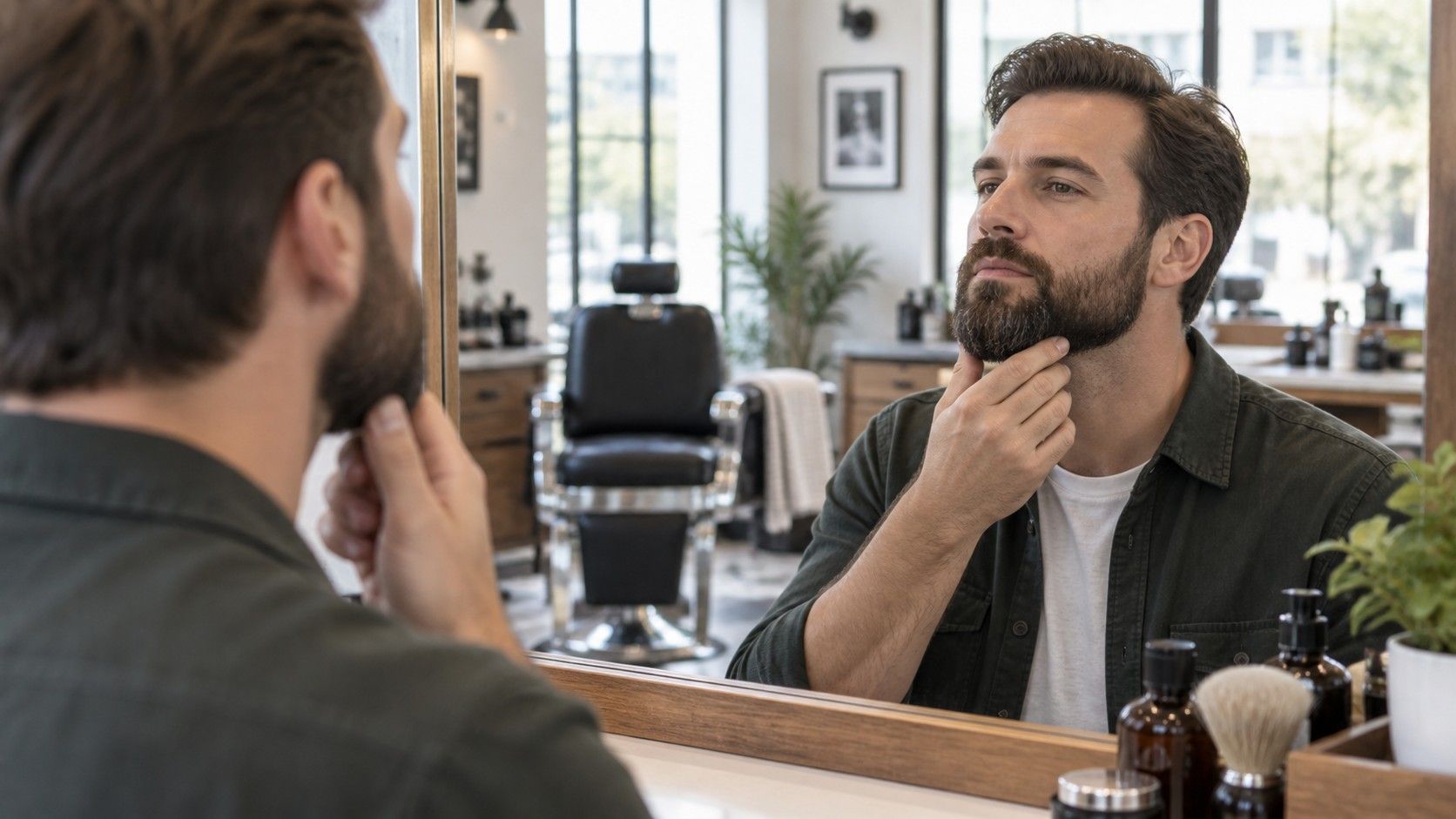
Do this check in a mirror and in a level photo. A bathroom selfie taken from close range can overstate the centre of the face, while a photo made from several feet away can flatten cheekbone projection. Keep your expression neutral and your head straight. Then turn your head slightly left and right. The goal is to notice whether the cheekbones remain the visual high point, not to find a line that fits every angle perfectly.
Facial fullness changes what is visible. A person with pronounced cheekbones can look more oval when the cheeks are fuller, and more angular when weight changes or lighting is overhead. That is normal. The underlying bone structure is only one part of the picture, and a diamond face label can be more or less useful at different times. Treat the label as a starting hypothesis you can revise.
Heart and diamond are confused because both can finish in a narrower chin. Look higher. A heart face usually has more width at the forehead or temples, which then tapers toward the chin. A diamond face carries the greatest width in the cheekbones, with the forehead sitting inside that width. If you cover the lower half of the face with your hand, a heart shape may still feel broad at the top; a diamond often feels narrower before the cheeks take over.
Oval is the other common comparison. Oval faces generally have a smoother, more even rhythm from forehead through cheekbones to jaw. There may be no sharp point of maximum width. On a diamond face, the contrast at the cheekbones often reads more strongly, especially in direct light. Still, an oval-diamond border is not a problem to solve. If you like the ideas suggested for both, that is evidence that your actual face has features from each.
| Check | Diamond | Heart | Oval |
|---|---|---|---|
| Leading width | Cheekbones | Forehead or temples | Evenly distributed |
| Upper face | Narrower than cheekbones | Often the broadest area | Softly rounded |
| Lower face | Narrower toward chin | Tapers toward chin | Gently rounded jaw |
| Helpful test | Compare temple width with cheekbones | Trace top-to-bottom taper | Look for an even outline |
Try not to use one feature as a shortcut. A pointed chin does not automatically mean diamond, and high cheekbones are common on many face types. The comparison becomes clearer when you consider forehead, cheekbones, and jaw together. If the answer is still mixed, call your face cheekbone-led and move on to practical experiments.
Use hair framing to decide how much presence you want at the temples
Hair around the temples is often the most noticeable styling lever for diamond face characteristics. A soft side fringe, loose curtain fringe, or layers that begin around the cheekbone can add a little horizontal presence above the widest point. This does not need to conceal the forehead. It simply changes the path the eye takes around the face. A full blunt fringe can work too, but its success depends on density, hairline, and whether you enjoy the maintenance.
For medium and long hair, look at where the fullest part lands after it dries naturally. If all the volume sits exactly at the cheekbones, the cut may make that width feel stronger. Movement through the temples, at the jaw, or near the collarbone can redistribute the frame. Curls and waves do this naturally; straight hair may need layers or a different parting. Take one photo on wash day and another on day three, because a cut that only works immediately after styling is a demanding arrangement.
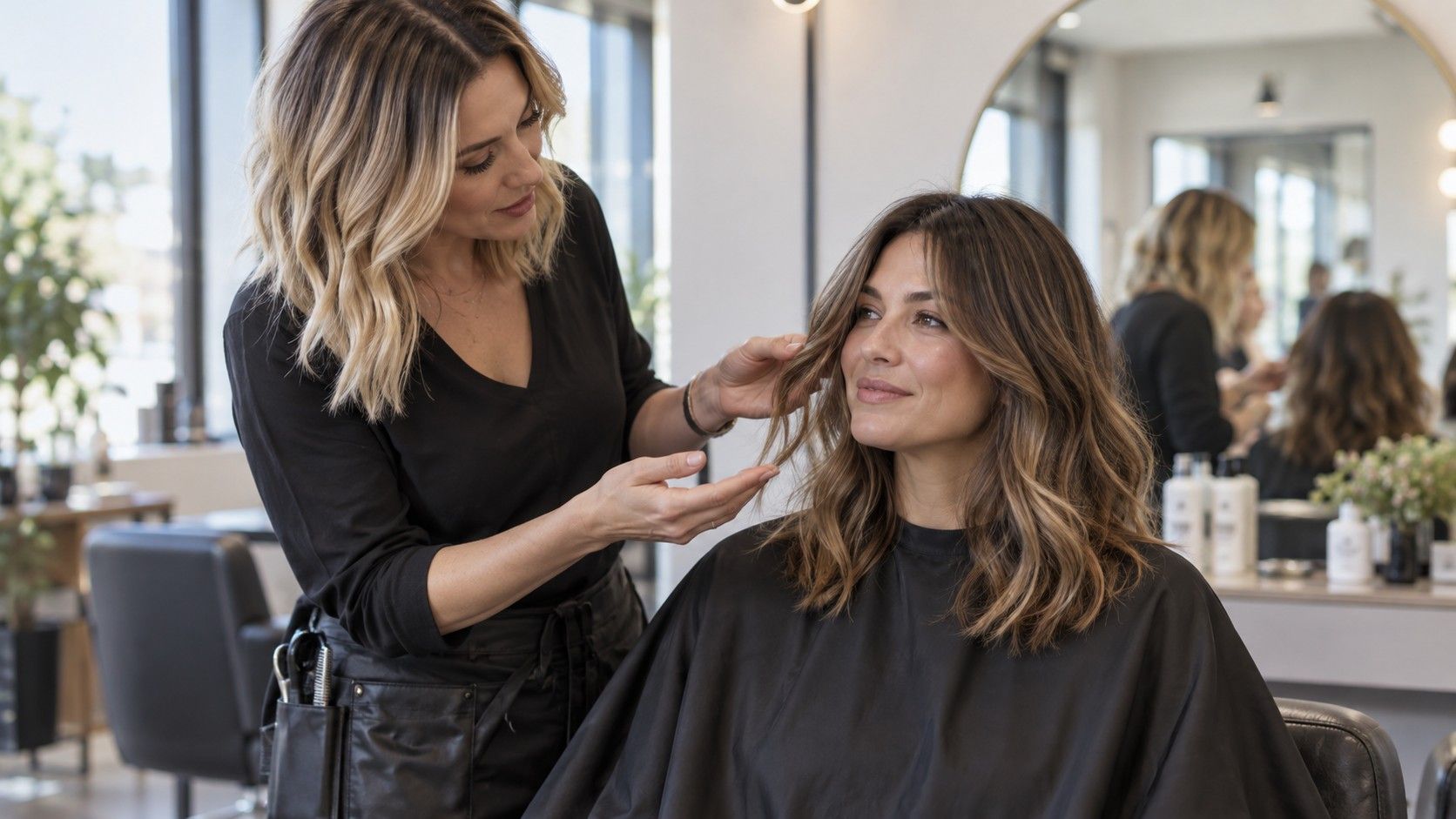
Short styles can be particularly good for testing proportion because the outline is easy to see. A pixie with softness at the forehead, a textured crop with a side sweep, or a bob with a little width near the jaw gives different results without requiring a claim that one is correct. When speaking to a stylist, mention your texture, how often you blow-dry, and which part of your face you like to leave visible. Those details are more valuable than arriving with a single label.
Test frames and brows in the same lighting you actually live in
Cat-eye frames are often recommended for diamond faces, but a dramatic upward corner is only one option. It can echo the cheekbone line and create a sharp, polished effect. Softer upswept frames, rounded square frames, or styles with some brow-line emphasis can offer a quieter version. The practical check is fit: frame width should feel comfortable, temples should not pinch, and the lenses should not sit so high that you are constantly looking over them.
Try on frames with your usual hair part and, if you wear makeup, your usual brow shape. A frame that looks balanced with bare hair pulled back can feel completely different with waves around the temples. Photograph two or three candidates from straight on, then leave the shop image alone for ten minutes. Returning to it with fresh eyes often tells you more than staring at the mirror under bright retail lighting.
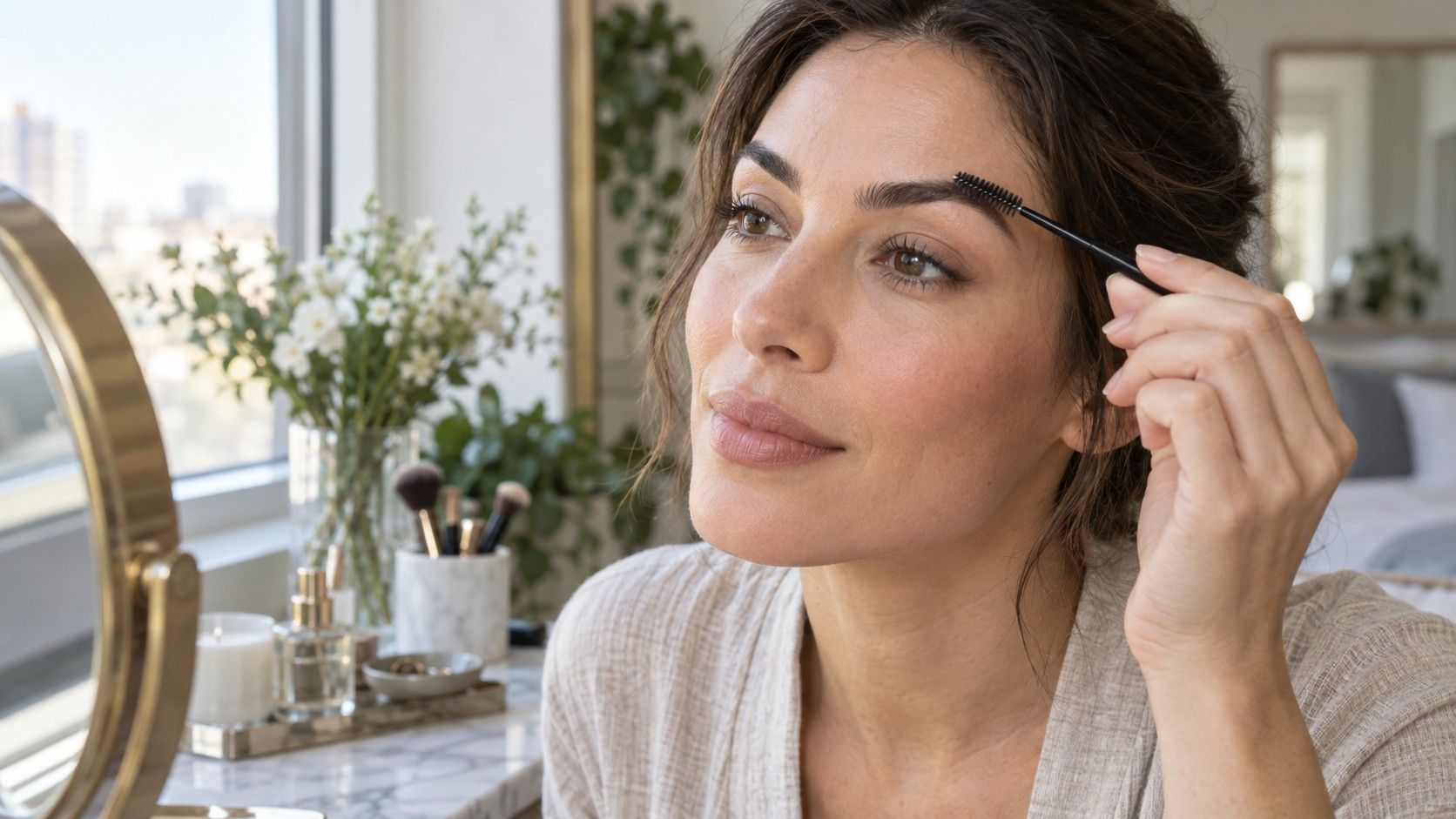
Brows can also shape the upper face, but they deserve a light hand. A very high, angular arch can repeat an already angular outline; a softer arch or a straighter front may produce a more relaxed expression. That does not mean every diamond face needs rounded brows. Follow your natural growth pattern first, and adjust only enough to make grooming easier. The brow should still look like it belongs to your face when you are not wearing the rest of your makeup.
Use more than one angle before you settle on a description
Face-shape apps and outline filters can be fun, yet they tend to make one angle look definitive. A front photo with a raised phone, a side photo, and a mirror view contain different distortions. Build a small set of neutral images instead: hair away from the face, camera at eye height, soft window light, and a relaxed jaw. Compare them on a larger screen if you can. You are looking for recurring proportions, not a flattering or unflattering moment.
Also notice the features that make the description less tidy. You may have diamond-like cheekbones with a broader forehead, or a narrow chin with a very soft jaw. These combinations are common and useful. They let you choose styling ideas from adjacent categories rather than buying into a narrow recipe. A label that makes you feel constrained has stopped doing its job.
Once you recognise a cheekbone-led outline, keep the experiments small. Change the parting for a week, borrow two frame shapes, or try blush a touch closer to the centre of the cheek. The best result is not a supposedly balanced face. It is a look that remains comfortable in motion, works with your hair on ordinary mornings, and feels recognisable when you catch your reflection unexpectedly.