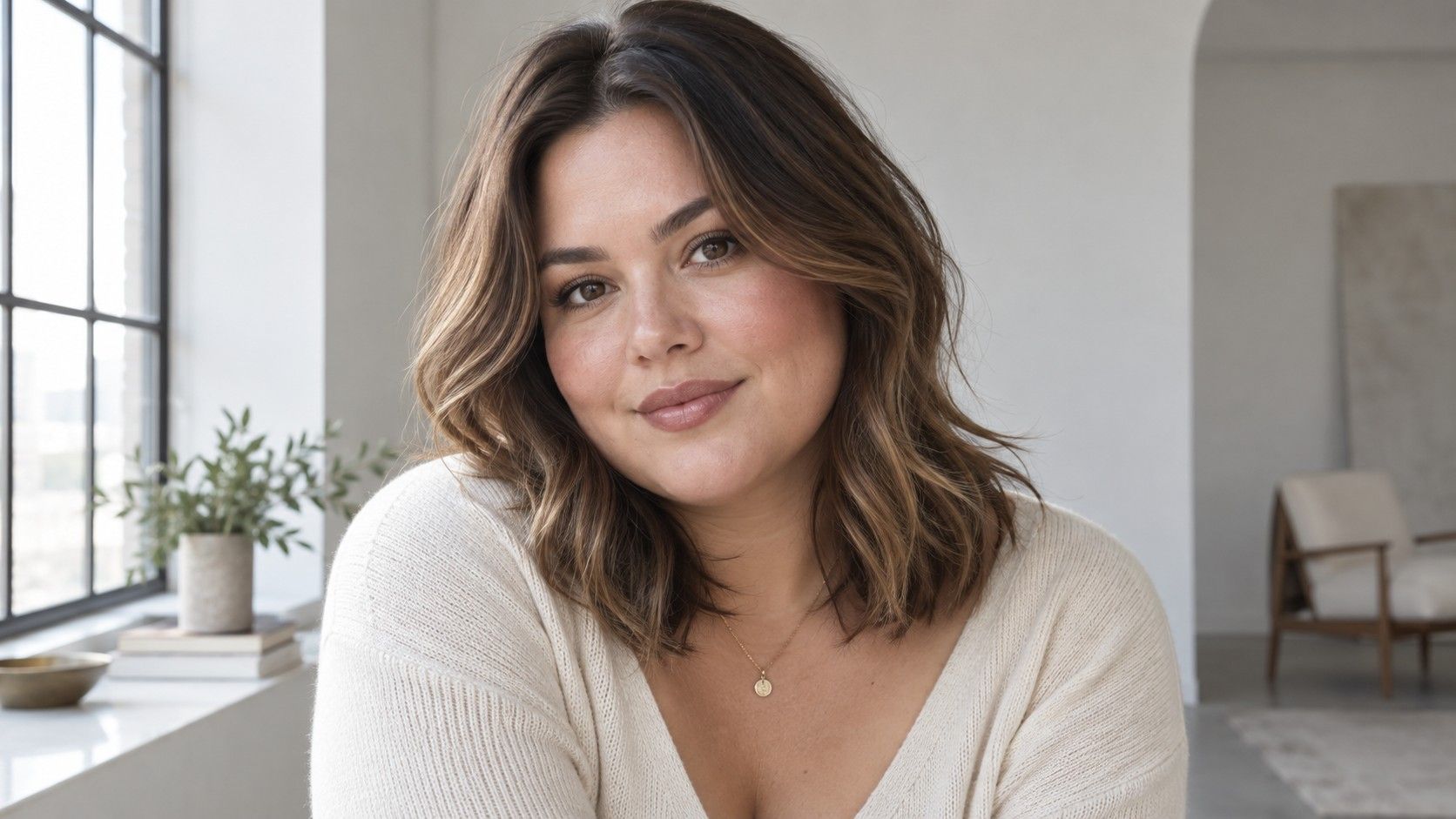
A round face shape is about the relationship between length, width, and a softly curved outline. It is not a judgement about cheek size or a problem to solve. Once you can see the pattern clearly, you can choose to echo its softness, introduce a little structure, or ignore the whole category and wear what feels right. The useful part is observation, not correction.
Separate a round face from oval and square patterns
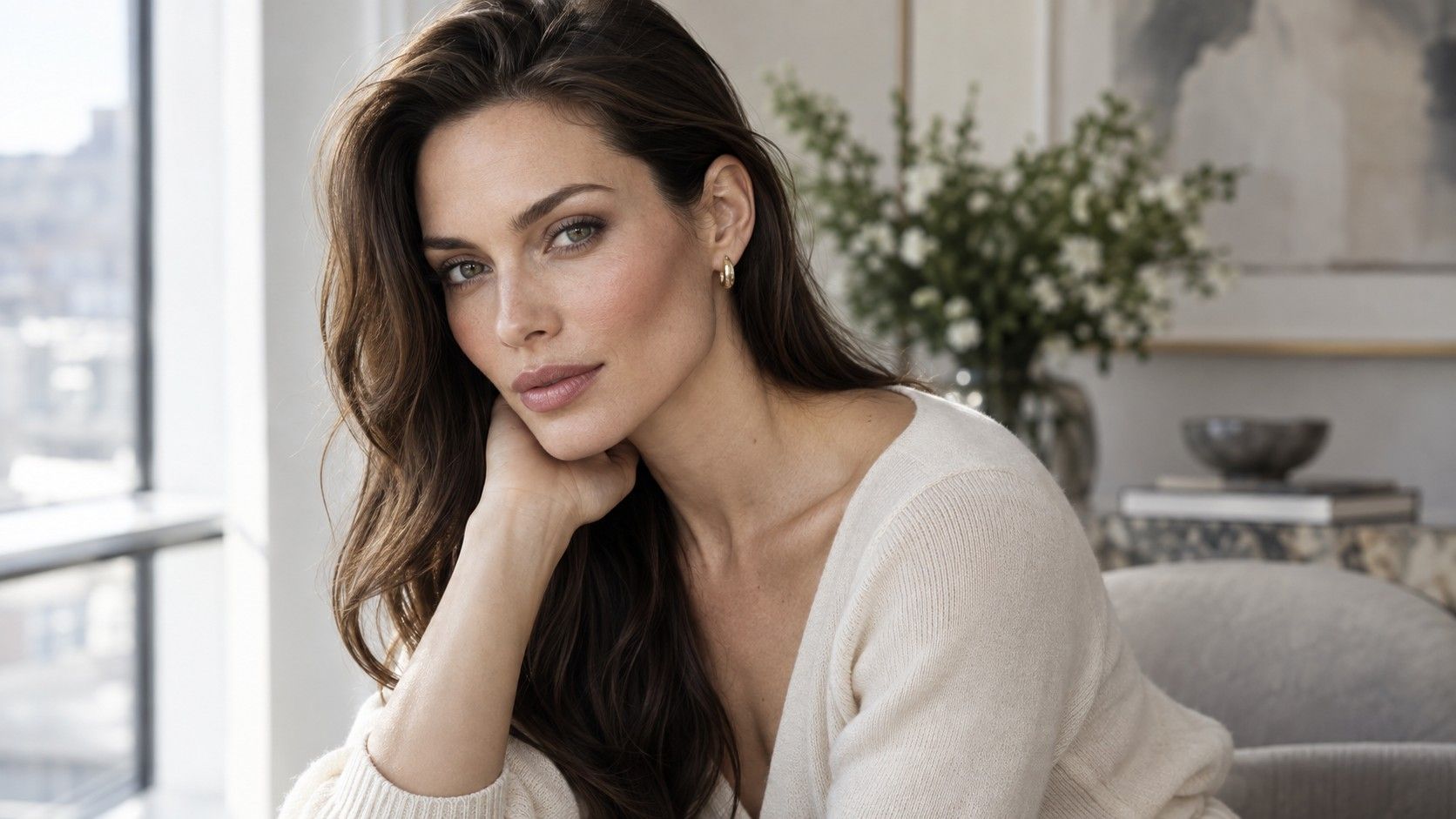
To tell if you have a round face, begin with a straight-on view in even light. Face length and width are often fairly close, the cheeks can be a prominent point of width, and the jaw turns in a gradual curve rather than a hard angle. An oval face is usually a little longer from hairline to chin. A square face can have similar length and width too, but its forehead and jaw tend to align more clearly and the corners near the jaw are easier to spot. Do not decide from a smiling photo: smiling lifts the cheeks and can make almost any face appear rounder. Relax the mouth, keep the head level, and compare the outer line from temple to jaw on both sides. The line should feel continuous rather than straight and angular.
Measure width without making cheeks do all the work
Cheeks are visible, so they are easy to overvalue. Instead, compare four areas: the width of the forehead, the distance across the cheekbones, the width of the jaw near its corners, and the full face length. A round face may be widest through the cheeks, but the transition toward the jaw is as important as the number itself. Use a tape measure only as a rough guide; small measuring errors are normal, and a few millimetres do not change a styling decision. A front-facing photo taken at eye level is often more useful than a close mirror inspection because it lets you see the overall outline. Stand back from the camera and crop afterward, since a close wide-angle selfie can expand the centre of the face and falsely emphasize cheek width.
| What you see | What it may suggest | Check before deciding |
|---|---|---|
| Similar face length and width | Round proportion | Use an eye-level, straight-on photo |
| Soft jaw with no sharp corner | Round or oval tendency | Compare it with the forehead and face length |
| Broad cheeks | Often round, but not enough alone | Notice whether the outline narrows gradually |
| Strong jaw angles | More square than round | Check whether the angle remains visible when relaxed |
Use hair shape and parting to test visual emphasis
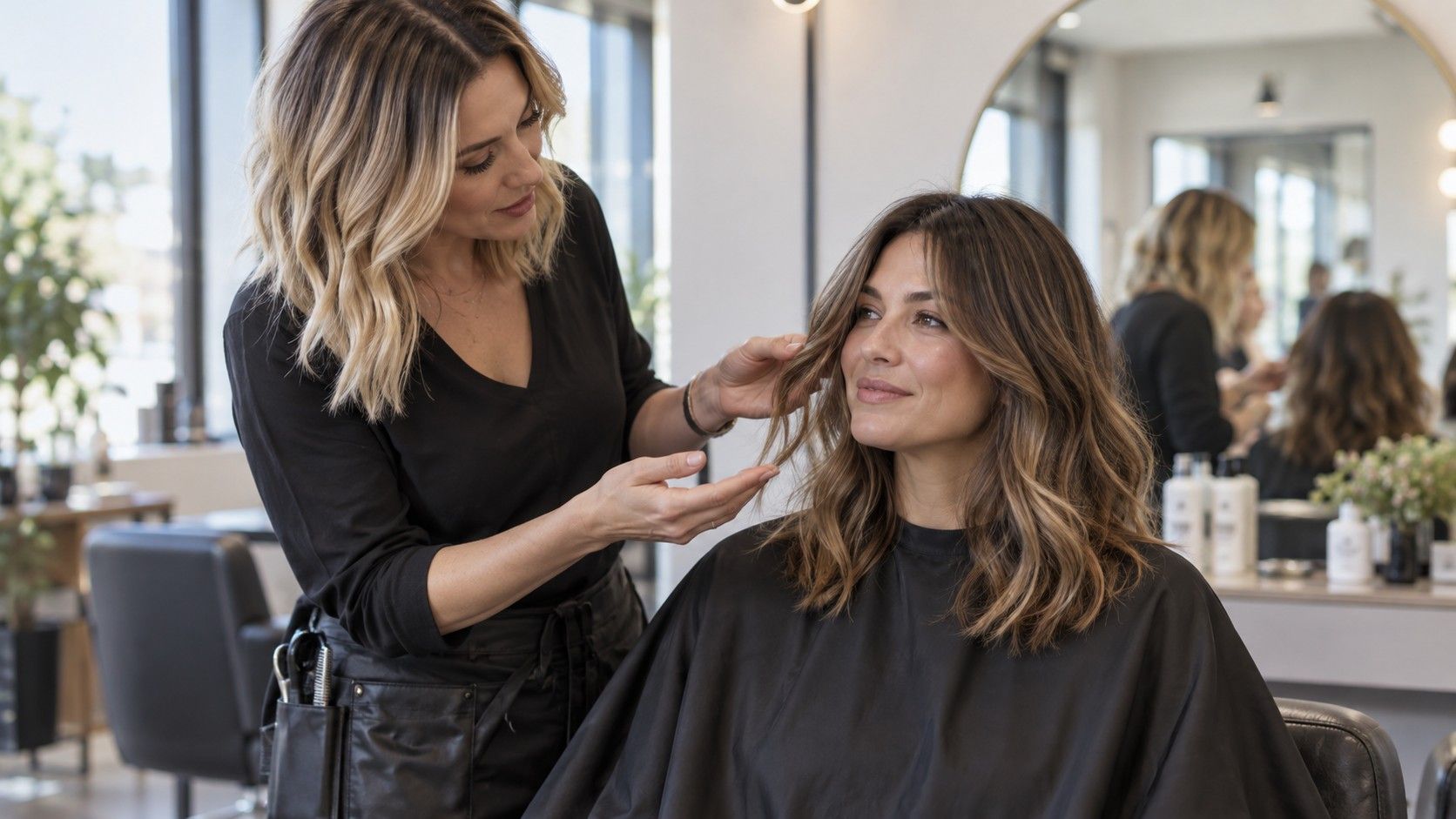
Hair can change the apparent outline more quickly than any chart. A centre part creates a vertical line that can make the face look more elongated; a deep side part can add asymmetry and draw attention toward one eye and cheekbone. Long layers beginning below the cheekbone keep movement away from the widest area, while a short cut with height at the crown can add a different vertical emphasis. None of these choices is compulsory. A chin-length bob that follows the jaw can look deliberate and soft; a blunt fringe can make the face appear shorter and may be exactly the effect you enjoy. When trying a change, photograph it in the same daylight and from the same distance. Compare placement of volume, not just whether the style was curled or straightened.
Try frames and makeup placement in ordinary light
Angular frames are often suggested for a round face because their horizontal and vertical edges create contrast with a curved outline. That is a starting point, not a rule. A softly rounded frame can look harmonious, while a narrow rectangle may feel too severe if it sits low on the nose. Fit matters: the frame should not be so wide that it extends far beyond the temples, and its brow line should feel comfortable when you move. With makeup, blush placed higher and farther outward can shift attention toward the cheekbone, while a central, rounded blush placement emphasizes softness. Contour can add a little shadow below a cheekbone, but it cannot and need not change bone structure. Check in daylight, because a vanity mirror can make strong contour look subtle when it is not.
Keep the softness when that is what you like
Many round-face styling lists quietly turn into instructions to look less round. That is not a useful goal. Soft cheeks, a gentle jaw, and similar length and width are ordinary facial proportions, not defects. You might choose vertical lines in hair because you enjoy the contrast one week, then choose a full fringe or rounded glasses because the softer look feels more like you. The best way to use round face characteristics is to make experiments specific: change the part without changing the cut, try two frame shapes at the same store, or compare blush placement in one photograph. After a few small tests, you will have evidence about your own face rather than a borrowed rule about what it should become.
A round face description becomes useful only when it leads to a choice you can actually test. Change the part without changing the haircut, try two frame shapes under the same shop lighting, or place blush differently in two photos. Notice where your attention goes first, then decide which effect feels right. Softness does not need to be disguised, and structure does not need to be avoided; both are available as styling tools. It also helps to account for ordinary life: glasses that slide, hair that loses volume in rain, and a cut that requires daily styling will outweigh a flattering diagram. Keep the observations that repeat across mirror checks and neutral photographs, and let the label remain an aid rather than a rule.
If you are unsure between round and oval, repeat the check with hair off the temples and a neutral expression. The result need not become perfectly clear for the experiment to be worthwhile; the recurring proportion is enough to guide a useful choice.
A few notes made after these small trials are enough. They turn a broad description into evidence from your own mirror, photographs, and daily routine, which is where a styling decision finally has to work.