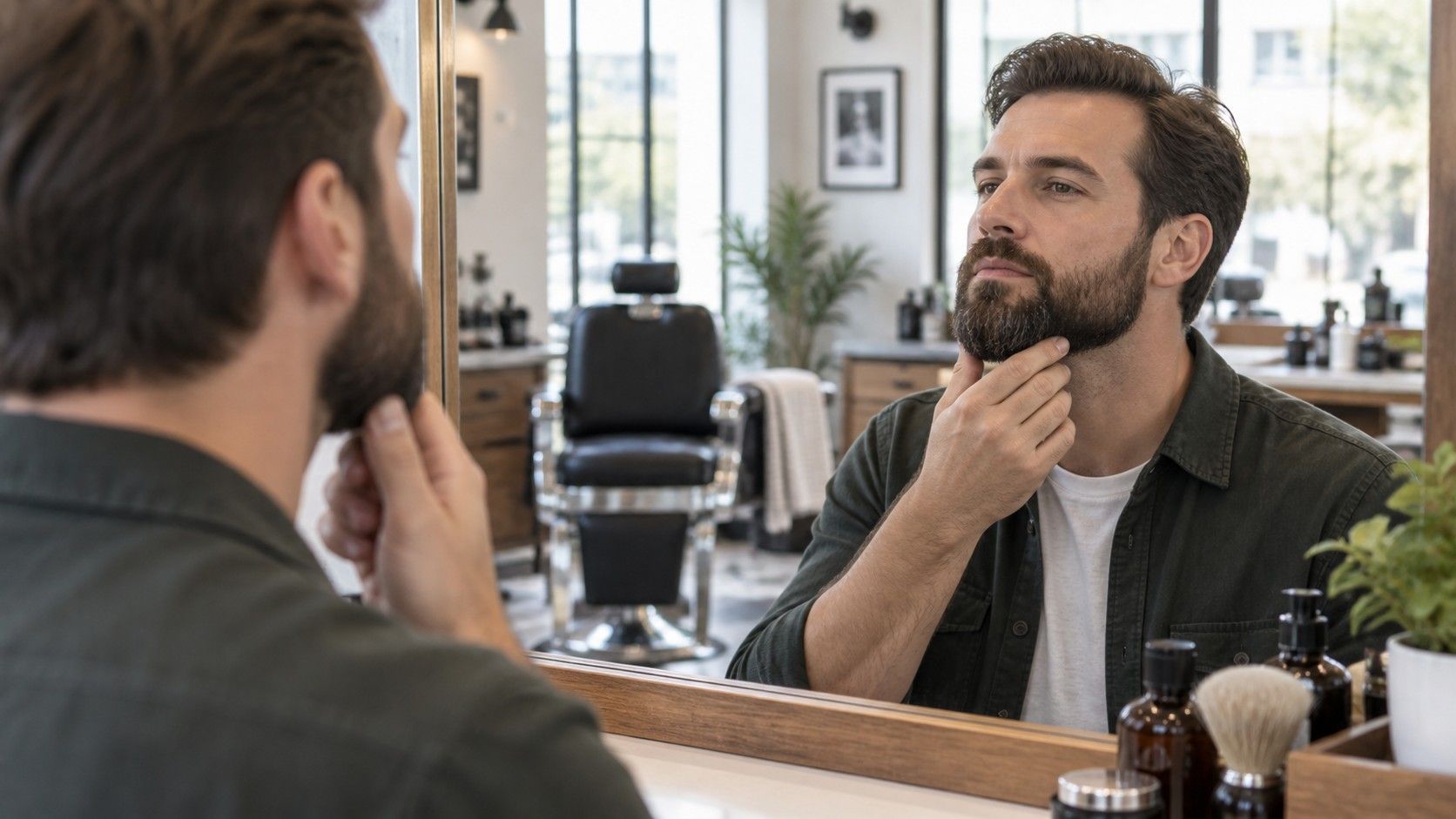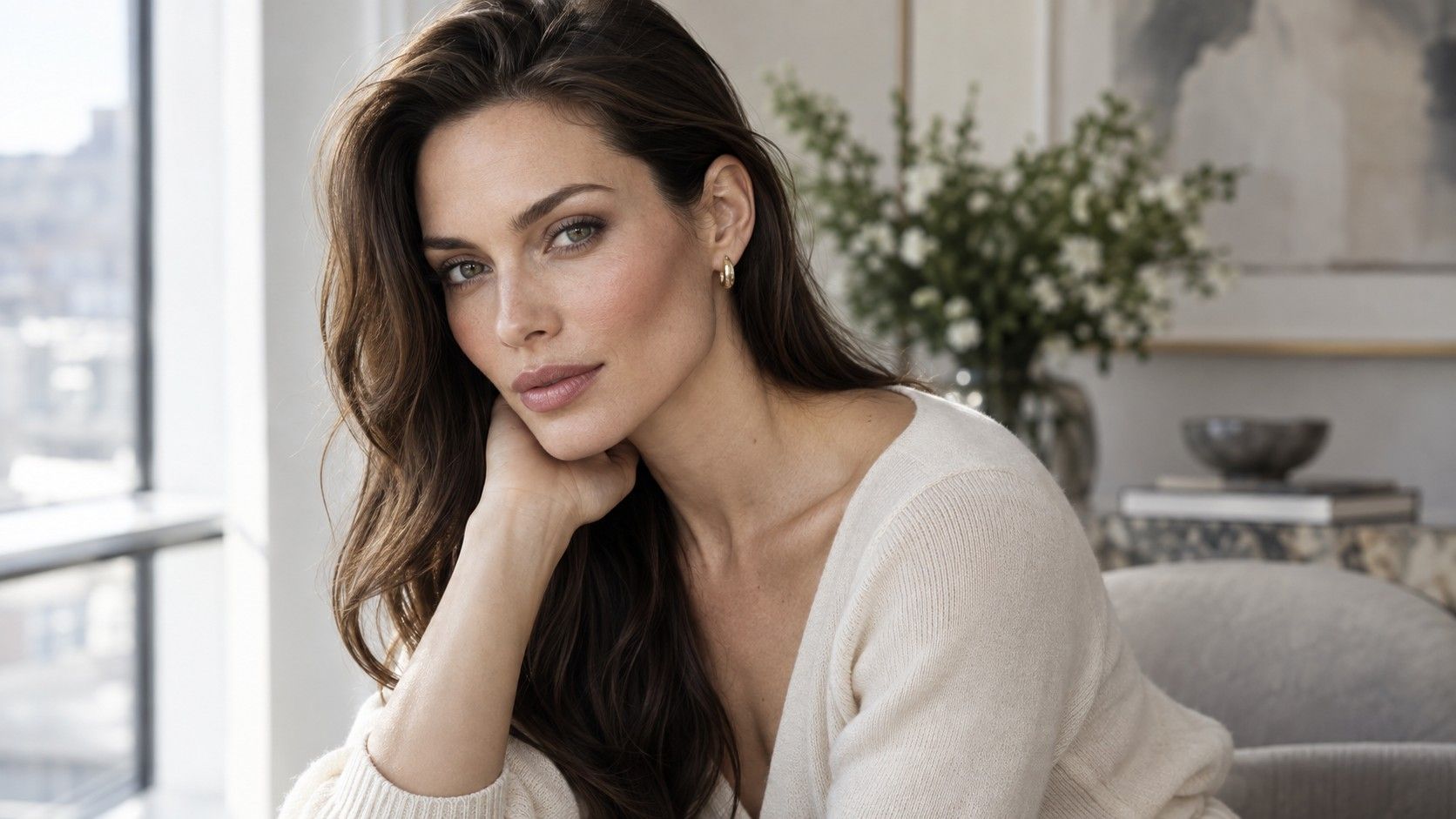
An oval face shape is often described as balanced, which sounds simple until you try to identify it in a mirror. The useful definition is not “perfectly even” and it is certainly not an ideal to chase. It is a proportion pattern: the face tends to be a little longer than wide, the cheekbones may be the widest point or close to it, and the jaw moves toward the chin in a soft curve.
Look for the proportion pattern rather than a perfect oval outline
Start with face length. On an oval face, the distance from hairline to chin is commonly greater than the width across the cheekbones, but not dramatically so. The forehead, cheekbones, and jaw usually move gradually from one to another instead of creating an abrupt wide-to-narrow contrast. The jawline is rounded rather than sharply squared, and the chin is neither the dominant point nor completely flat. These are small differences, so use a straight-on photo and a mirror check rather than relying on a close selfie. A wide phone lens can make the cheeks look broader and turn a gentle oval proportion into something that reads round. Hair also changes the impression: a high volume style at the temples may widen the upper face, while a heavy fringe can make the visible face look shorter.
Separate an oval face from its common look-alikes
Oval and round are frequently confused because both can have soft cheeks and a curved jaw. The deciding clue is usually length: a round face often has similar length and width, while an oval face has more vertical room between the hairline and chin. Oval and oblong can also overlap. An oblong pattern has noticeably more length and often a straighter route down the sides of the face; an oval still feels gently tapered. Heart-shaped faces can be oval through the lower half but show a clearly broader forehead and a narrower, more pointed chin. Do not make the label depend on one day’s hairstyle, a smile, or a photo taken from below. If two labels remain plausible, write down the shared facts—soft jaw, balanced cheekbones, moderate length—and use those facts when choosing a haircut or frames.
| Feature | Often seen with an oval face | Useful comparison |
|---|---|---|
| Length | Slightly greater than cheekbone width | Round faces are closer to equal; oblong faces are longer |
| Jawline | Softly rounded toward the chin | Square faces show clearer corners |
| Forehead | Near the cheekbone width, without a strong flare | Heart faces often look wider at the upper face |
| Overall outline | Gradual and balanced | Diamond faces often peak more at the cheekbones |
Choose haircuts by the framing you want that day
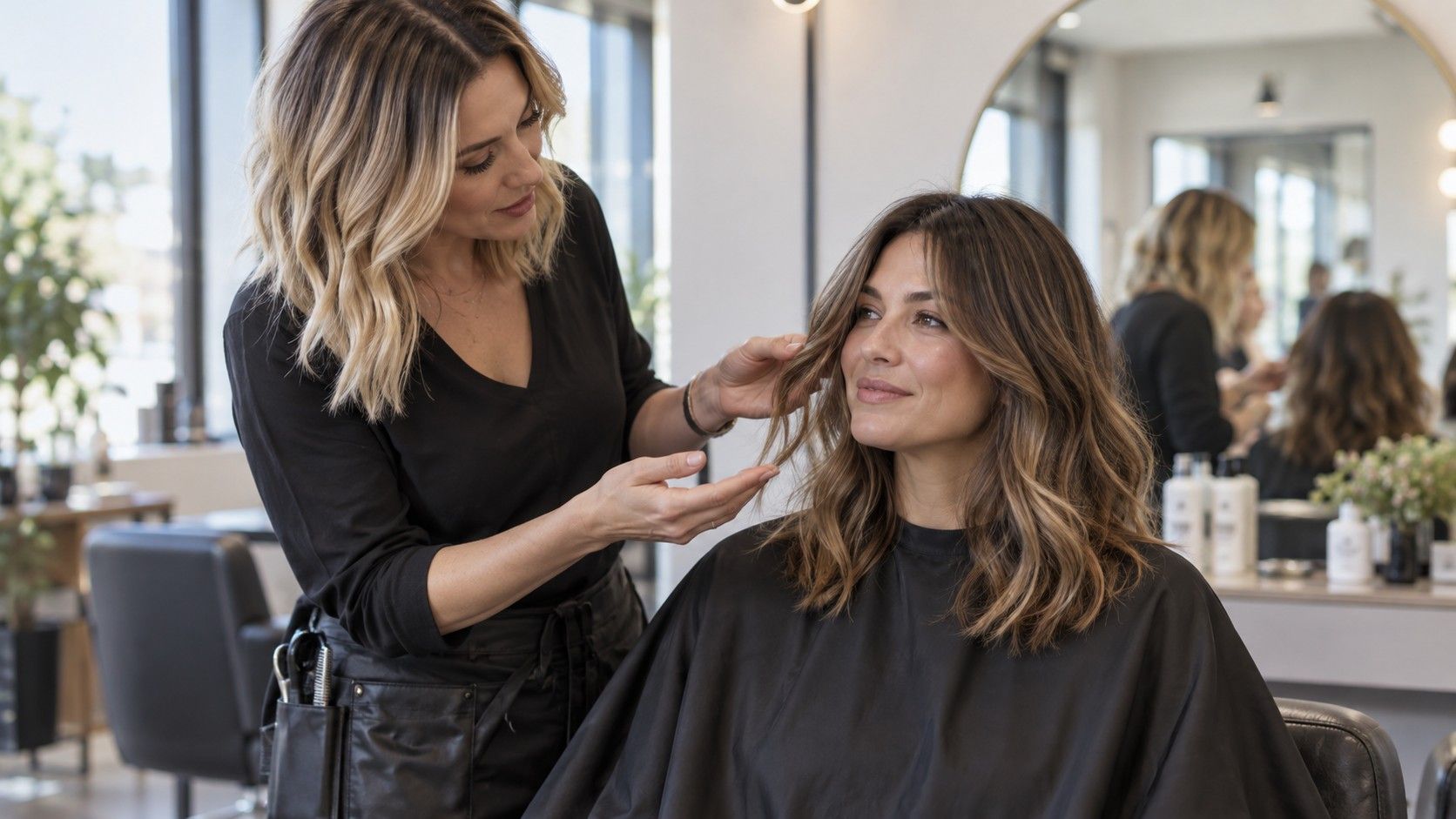
The advantage of an oval face is not that every haircut is automatically flattering; it is that many silhouettes can be tested without fighting a strong width or length imbalance. A centre part can echo the face’s vertical line, while a soft side part can bring attention toward one cheekbone. A blunt bob ending at the jaw makes the lower face more noticeable; layers starting below the cheekbones keep the outline softer. Long hair with movement around the shoulders changes the frame in a different way from a short crop that exposes the temples. When you are deciding in a salon, bring photos that show the placement of volume, not only the final style. Ask where the fringe will sit once it dries and where the widest part of the cut will land. Those practical details affect the visible proportions more than the label “oval.”
Use glasses and makeup as optional framing, not correction
Glasses are a fast way to see how a frame changes the balance around an oval face. A wider rectangular frame can add a horizontal note; a rounded frame repeats the soft jawline; a frame with a stronger brow can draw attention upward. Try them in daylight and look at the bridge fit as well as the shape. If the frame slides down, its apparent position changes and so does the effect. Makeup works similarly. Blush placed high and slightly outward can emphasize the cheekbone area, while a more central placement keeps the face looking softer. A subtle contour below the cheekbone can create shadow, but there is no need to carve a new outline. Check the result in ordinary light rather than only under a bright vanity mirror, where contrast often looks stronger than it will outside.
When another description fits better, keep the useful observations
If your face looks oval in one image and heart-shaped in another, do not treat that as a mistake. The hairline, facial fullness, camera distance, and head position can all change what dominates. An oval face guide is most useful when it helps you articulate the details you repeatedly see: a face slightly longer than wide, a soft jaw, and no severe contrast between forehead and cheekbones. Those details can travel with you even if you later prefer “oval-heart” or simply “soft and balanced.” Styling is easier when you test one variable at a time—a new part, a frame shape, a fringe length—and photograph it from the same distance. You are not trying to prove a category; you are building a reliable sense of your own proportions.
Practical details are often more useful than a rule about oval faces. Consider whether you wear glasses every day, tuck your hair behind your ears, use heat styling, or need a cut that works in damp weather. Those habits determine whether a fringe, a bob, or long layers will be enjoyable to live with. Before a bigger change, use clips to imitate a parting or tuck the front sections underneath and take a photograph from a normal distance. The purpose of recognising an oval face shape is not to preserve a supposedly ideal balance. It is to notice why a particular frame feels broad, why a cut brings attention to the jaw, and how to choose contrast or harmony on purpose.
When a recommendation feels too absolute, turn it into a question about placement. Where does the volume sit? Does the frame rest comfortably? Does the line of the cut make you feel open or over-styled? Those answers are personal, observable, and far more durable than a fixed chart.