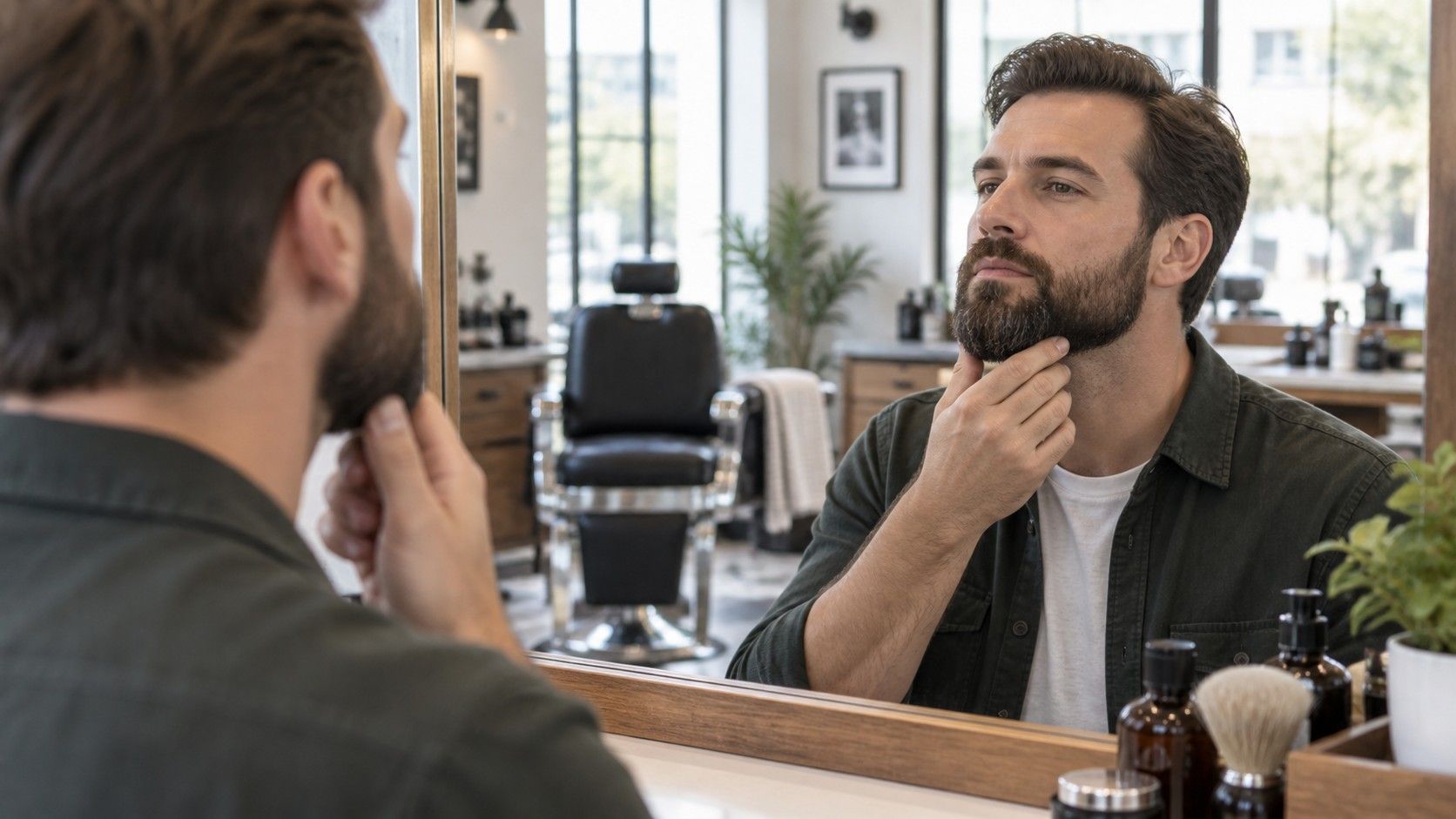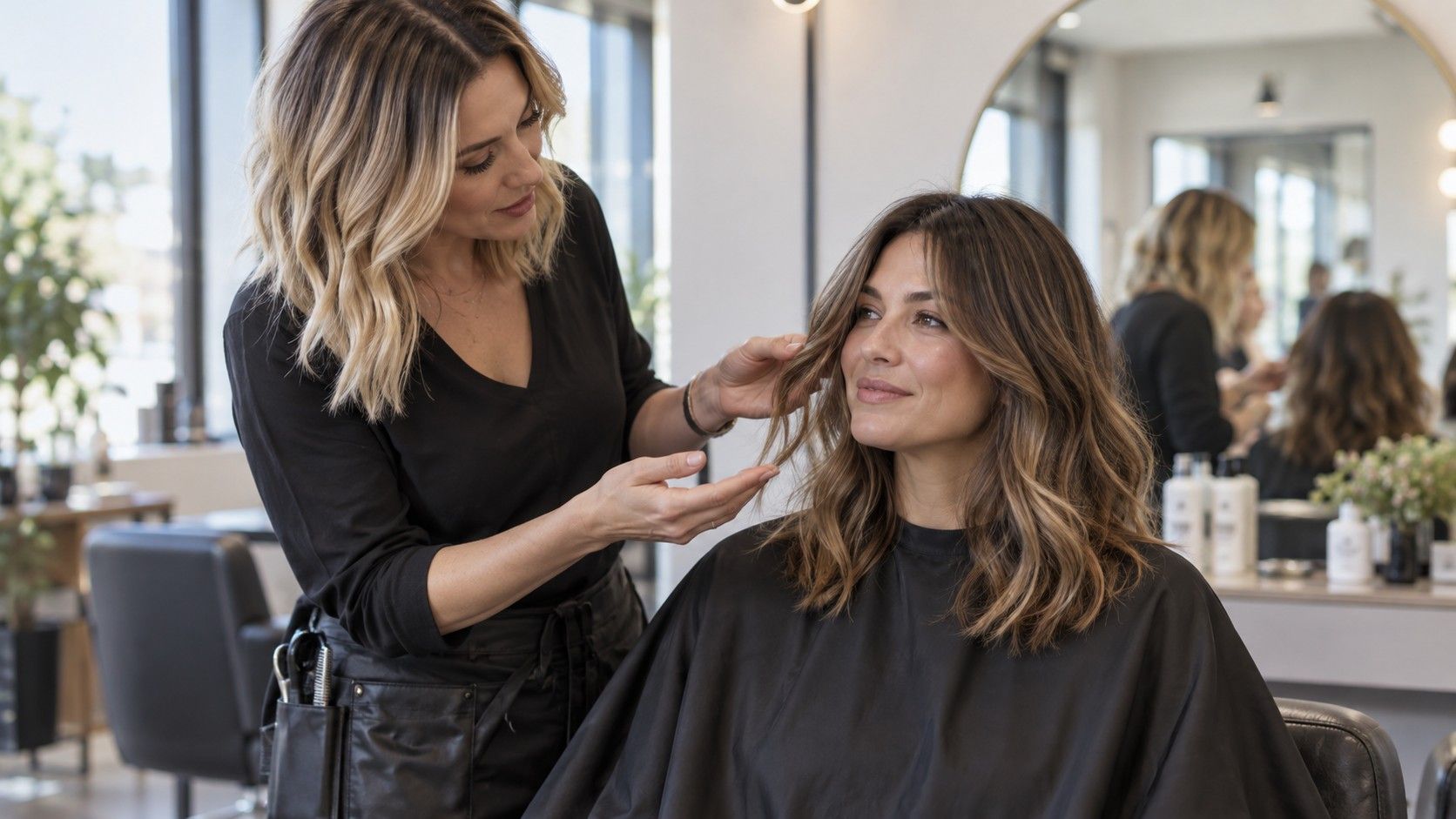
Oblong and rectangle face shapes are often placed in the same box because both can look longer than they are wide. That shared length is real, but it is not the whole story. Oblong usually suggests a longer outline with softer transitions at the jaw, while rectangle adds a clearer sense of corners through the forehead, jaw, or both. The distinction becomes useful only when it changes how you understand a haircut, a pair of glasses, or a photo. It is not a reason to treat length as something that must be hidden.
Why both shapes are grouped together in the first place
Start with proportion rather than a tracing. When you look straight ahead, an oblong or rectangle face often has more vertical distance from hairline to chin than horizontal distance across the cheekbones. The forehead, cheeks, and jaw can appear fairly similar in width. This is different from an oval face, where the face may also be longer but narrows more gently through the jaw, and different from a square face, where width and length are closer together.
Compare the jaw and forehead angles before choosing a label
Hair can make the vertical proportion look stronger or weaker. A high ponytail, closely cropped sides, or a photograph from below can all add apparent length. Loose fringe, curls beside the cheeks, or a broad collar can alter it in the other direction. That is why a single image from an app is rarely enough. Look in a mirror with your hair pulled back, then with your everyday style, and compare the two impressions before assigning a name.
There is no reliable measurement that turns a face into a clean category for every person. You can measure from hairline to chin and across the cheekbones if you enjoy numbers, but the outlines are still influenced by expression, lens choice, and facial fullness. A more useful question is whether the face reads long and whether the jaw reads soft or angular. Those two observations already give you the practical information most charts promise.
An oblong face often has length with a relatively soft jaw. The sides may feel straight for part of the face, yet the chin and jaw corners do not produce a strong box-like edge. A rectangle face shape usually carries more structure: the forehead can look squared, the jaw corners may be noticeable, and the side lines feel more parallel. The difference can be subtle, particularly when hair covers the temples or when the jaw has natural softness.
Use a side-lit mirror or a daylight photo to see this clearly. Overhead bathroom lighting can sharpen every jawline, while flat front light can erase it. Notice the place where the jaw turns toward the chin. Does it make a visible corner, or does it round gradually? Then compare the temples with the jaw. Repeated straightness at both ends supports rectangle; a long outline with softer ends supports oblong.
| Feature | Oblong face | Rectangle face | What to test |
|---|---|---|---|
| Overall proportion | Longer than wide | Longer than wide | Compare a level mirror view with a neutral photo |
| Jawline | Often softer or rounded | Often more angular | Check where jaw turns toward chin |
| Forehead | May be softly curved | Can read straighter or squarer | Look with hair off the temples |
| Useful styling goal | Add softness or horizontal movement if desired | Choose whether to soften or echo structure | Try options rather than follow a rule |
A square face can enter the comparison if the jaw is angular, but its width usually feels closer to its length. If you are deciding between square and rectangle, cover the lower edge of a photo and compare the remaining vertical span with cheekbone width. If length is still the dominant impression, rectangle is often the more useful term. Again, the label only needs to be accurate enough to help you choose a reference photo.
Add width through hair and accessories only when you want that effect
Advice for oblong face shapes often says to add horizontal width. That can be helpful, but it should not become a command. The visual effect comes from where hair has movement: a fringe, waves around the cheeks, a bob with some side width, or layers that turn outward near the jaw can interrupt a long vertical line. On naturally curly hair, the shape may already appear through the curl pattern. On fine straight hair, a precise cut and parting can make a larger difference than extra product.
For a rectangle face, consider whether you want to soften the angularity or enjoy it. A side part, curved fringe, face-framing layers, and rounded waves can create a gentler frame. A sleek centre part or a sharp blunt bob can repeat the geometry for a deliberate, graphic look. Neither choice is more balanced. The routine matters: ask yourself how the cut behaves after air-drying, after sleep, and on a humid day, not only when it leaves a salon.
Accessories can make the same experiment less permanent. Wider earrings, a scarf tied close to the neck, or a collar with horizontal detail can create a different frame around the jaw. They will not change your face; they simply change the composition of an outfit. Take two quick photos in similar lighting and compare them later. If one version feels more like you, it is useful information. If both work, that is even better.
Choose glasses by fit, lens depth, and your actual prescription
Frames are often discussed as though face shape is their only consideration. In practice, bridge fit, lens thickness, eyebrow position, and prescription can matter more. For a longer face, a frame with reasonable lens depth can break up the vertical line and feel visually grounded. Rounded rectangles, softer squares, and styles with a slightly stronger brow line are common starting points. They are not mandatory; narrow frames can also look excellent when the fit is right.
Rectangle face shapes can look good with rounded edges when you want contrast, or with angular frames when you want to echo the jaw. Try both. Keep your head level and check how the frames sit after smiling and looking down. A shape that stays in place and lets your eyebrows move naturally is often a better choice than one that matches a chart but feels awkward after ten minutes.
Bring your normal hairstyle when you shop if possible. Fringe, volume at the temples, and hair colour all affect what a frame looks like. Take a photograph from a few steps back rather than relying only on the close retail mirror. This distance gives a truer sense of proportion and prevents the lenses from becoming the only thing you see.
Know when oval is the closer match and when the exact word does not matter
Oval is sometimes the closer match when the face has length but the forehead and jaw taper evenly, with no strong corners. People often choose oblong because they notice length first, then discover that the jaw is too soft and the side lines too curved for a true rectangular impression. This does not cancel the length observation. It simply means that styling references for both oval and oblong may be relevant.
Hair, age, facial fullness, and even the glasses you wear can change the category you see. A short fringe may make the face appear more compact; a higher hairstyle can make it seem longer. Weight changes can soften a jaw, while a new haircut can reveal it. There is no benefit in forcing a permanent label through those shifts. Reassess when you need a fresh styling reference and keep the observations that stay consistent.
The practical takeaway is small and usable: notice length, notice the jaw, and then choose a visual effect that suits your routine. If you want softness, test curves and side movement. If you enjoy a more structured outline, let clean lines stay visible. Oblong versus rectangle face is a helpful comparison, not a test you can fail.