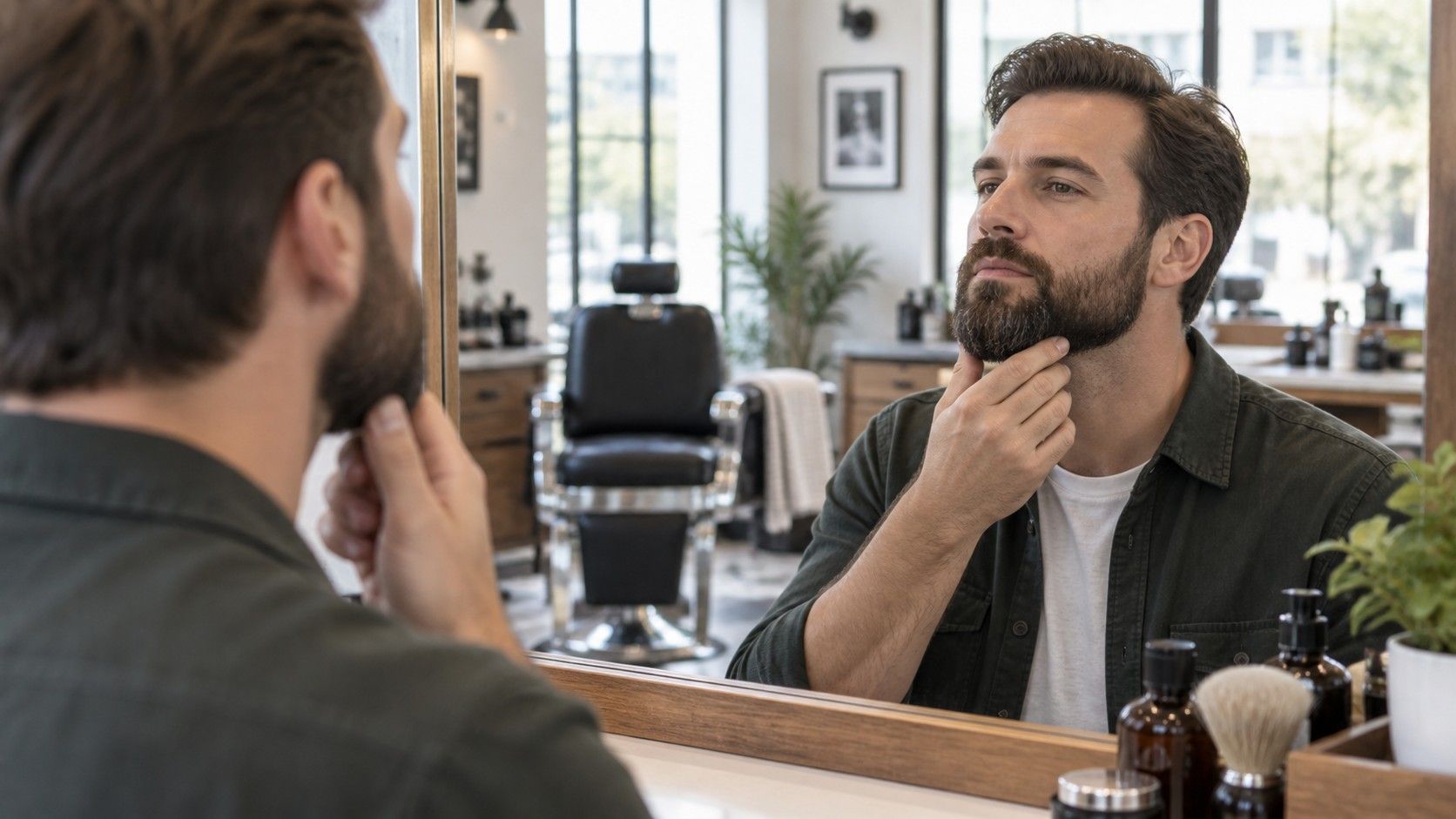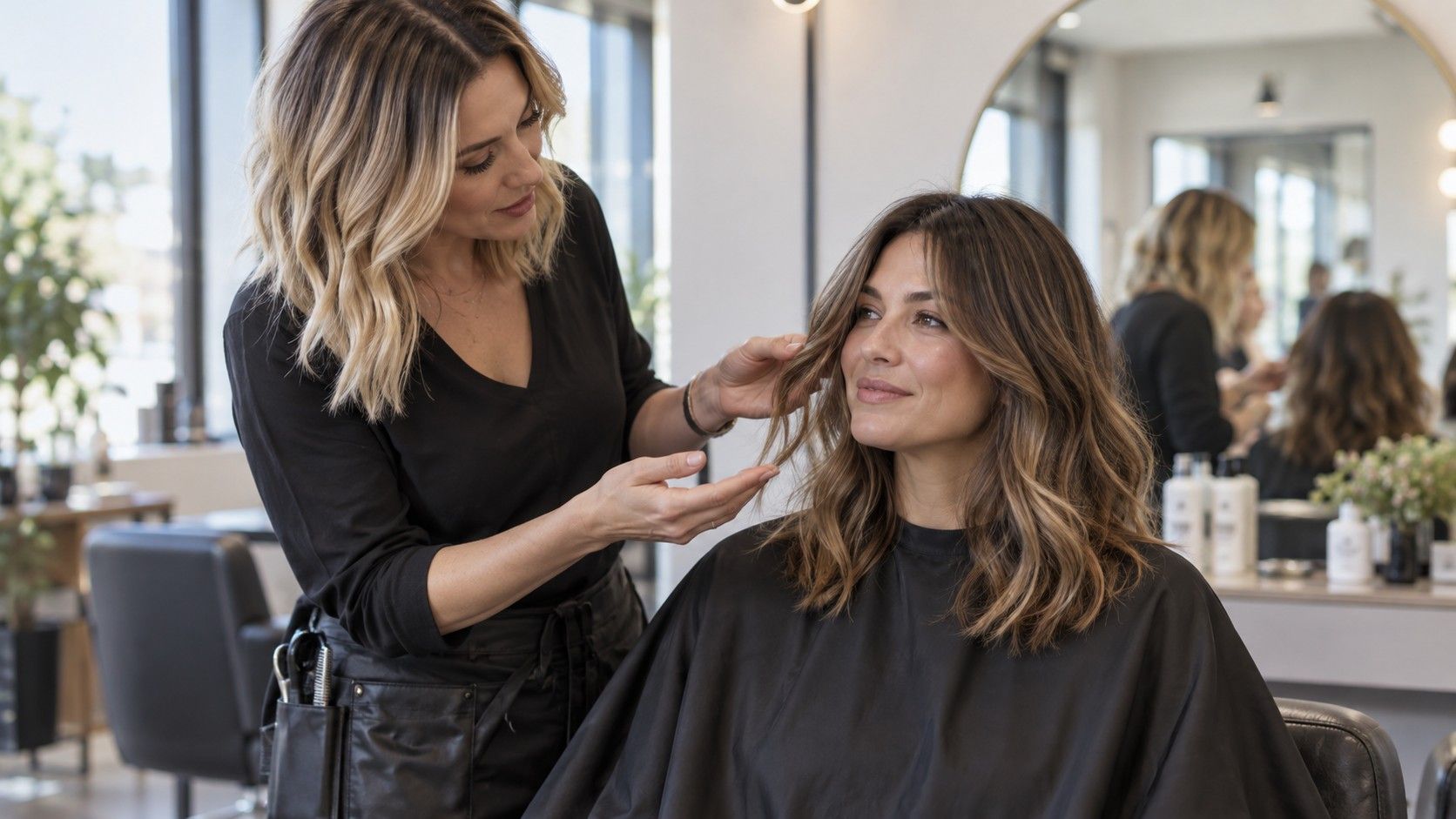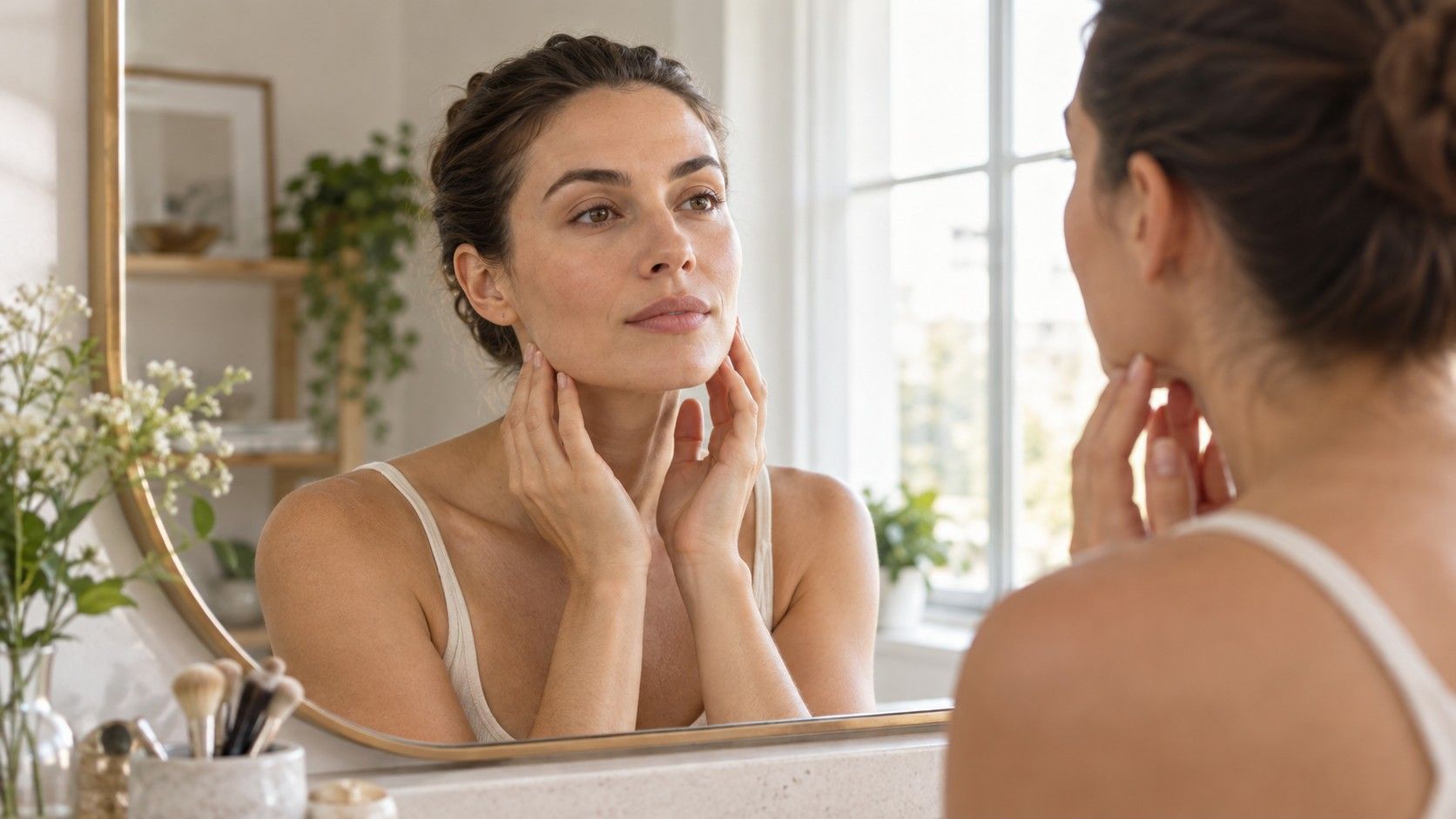
Finding your face shape is less like passing a test and more like noticing a pattern. A mirror, a front-facing selfie, and a few quiet minutes are enough. The useful question is not whether your face matches a perfect diagram, but which proportions keep showing up: length, width, cheekbones, forehead, and the line made by the jaw.
Start with proportions, not one feature
People often begin with the chin because it is easy to notice. That is where confusion starts. A pointed chin can appear on an oval, heart, or diamond-shaped face; a soft chin can sit below a face that is otherwise quite square. Step back from the mirror until you can see your whole face and hairline. Look at the outline from forehead to jaw, then compare it with the width across the cheekbones. A single striking feature matters less than the relationship between several areas.
Measure the four areas that make the comparison useful
Keep your expression neutral while you look. A broad smile lifts the cheeks and changes the apparent width; a tilted head can lengthen one side. Pull hair away from the temples if possible, but do not stretch the skin or pin it so tightly that the hairline looks different. Natural daylight beside a window is usually more revealing than an overhead bathroom light, which can throw shadows below the eyes and jaw.
You do not need precise millimetres. A flexible tape measure can help, but a rough comparison is usually enough. First note face length: measure from the centre of the hairline to the lowest point of the chin. Next compare forehead width at its broadest visible point, cheekbone width across the upper cheeks, and jaw width from one jaw corner to the other. Record whether one area is clearly widest or whether two areas are close.
Measure the jaw along its structure rather than under the chin. The relevant point is the outer angle near the base of each ear, not the soft area below it. If you use a selfie for this face shape test, take it straight on at eye height and stand far enough from the camera that the phone is not very close to your face. Close phone shots widen the centre of the face and can make the cheeks look fuller than they do in person.
| Area to compare | What to notice | Why it helps |
|---|---|---|
| Face length | Short, balanced, or noticeably longer than width | Separates many round, oval, and oblong patterns |
| Forehead | Broad, narrow, curved, or close to cheekbone width | Helps distinguish heart and square tendencies |
| Cheekbones | The broadest point or simply one part of a balanced outline | Useful for round and diamond comparisons |
| Jawline | Soft curve, tapered point, or visible corners | Adds context without deciding the label alone |
Compare the outline without forcing a label
Once you have the comparisons, use them as a shortlist rather than a verdict. An oval face often looks a little longer than it is wide, with a softly curved jaw and no single width that dominates. A round face has similar length and width with a smooth outline. A square face has comparable forehead, cheekbone, and jaw widths, plus more visible corners at the jaw. Heart and diamond patterns usually show a stronger contrast between the upper face, cheekbones, and chin.
Trace the outline lightly on a mirror with a washable marker only if you can stand still and see the whole hairline; otherwise a printed straight-on photo works better. Do not trace the hairstyle. Follow the skin line around the forehead, temples, cheeks, and jaw. The resulting outline is a clue, not a stencil. A face can be long with a soft jaw, broad through the cheekbones, and still not fit neatly into one of the familiar six names.
Why mixed face shapes are completely normal
Most people sit between categories. Bone structure, facial fullness, hairstyle, camera angle, and even a recent change in weight can shift what the outline seems to emphasize. Someone may have the length associated with an oval face and the wider forehead associated with a heart shape. Another person may look round in a close selfie but show a more oval proportion in a full-length mirror. That variation is not a failed result; it is the result.
It helps to write down two likely labels and the evidence for each. For example: “oval because length exceeds width and the jaw is soft; round because the cheeks are the widest point.” Then repeat the check on another day in neutral daylight. If the same two labels remain plausible, use the features they share when making styling decisions instead of trying to win an argument with a chart.
Use your result as a styling starting point
A face-shape label is most useful when it gives you a practical experiment. If your face looks longer than wide, try noticing where a fringe or a pair of glasses adds horizontal emphasis. If your jaw has stronger corners, compare a sharply cut bob with softer layers around the jaw. If your cheeks are the widest area, look at how a centre part and a side part change the visible balance. Take one photo in the same lighting for each option rather than relying on memory.
There is no need to correct, conceal, or balance a face into a different category. The goal is simply to understand the frame you are working with. A useful answer to “what is my face shape?” should leave you with a few observations you can use at a salon, an optician, or your own mirror: where the width sits, how the jaw reads, and which choices make you feel most like yourself.
One sensible way to use the result is to make a single change and compare it in the same light. Move a parting, try a frame with a little more height, or pin back the front layers of your hair. Then take a front-facing photo from arm’s length. You will see whether the change draws attention to the forehead, cheekbones, or jaw without having to trust a vague memory. Maintenance and comfort still matter more than a category: a cut that needs twenty minutes every morning may not be the right choice even if its outline looks interesting. Revisit the comparison after a haircut or when you have better photographs. A face-shape label is a broad map, not a fixed verdict, and it is allowed to remain slightly mixed.